

The Sales Team Bottleneck Every CMO Knows
Your marketing brings in leads. Hundreds, sometimes thousands of them. But here is the problem: most of those leads never convert. Not because the product is wrong or the messaging is off — but because you cannot give every single prospect the personalized, consultative experience they need to make a decision.
Traditional sales models require human intervention at every stage. A rep has to qualify the lead, ask discovery questions, understand pain points, recommend solutions, handle objections, and guide the prospect to a decision. This works beautifully when you have ten high-intent leads a month. It breaks completely when you have a thousand medium-intent visitors landing on your website every week.
You cannot hire enough sales reps to consult every website visitor. But what if you did not have to?
| Consultative selling at scale is not about replacing human judgment — it is about automating the steps that do not need a human in the first place. |
What Is Consultative Selling — and Why It Works
Consultative selling is a sales methodology where you lead with value, not with a pitch. Instead of pushing a product immediately, you ask questions, uncover real needs, educate the prospect, and recommend the solution that genuinely fits their situation — even if that means not selling to them today.
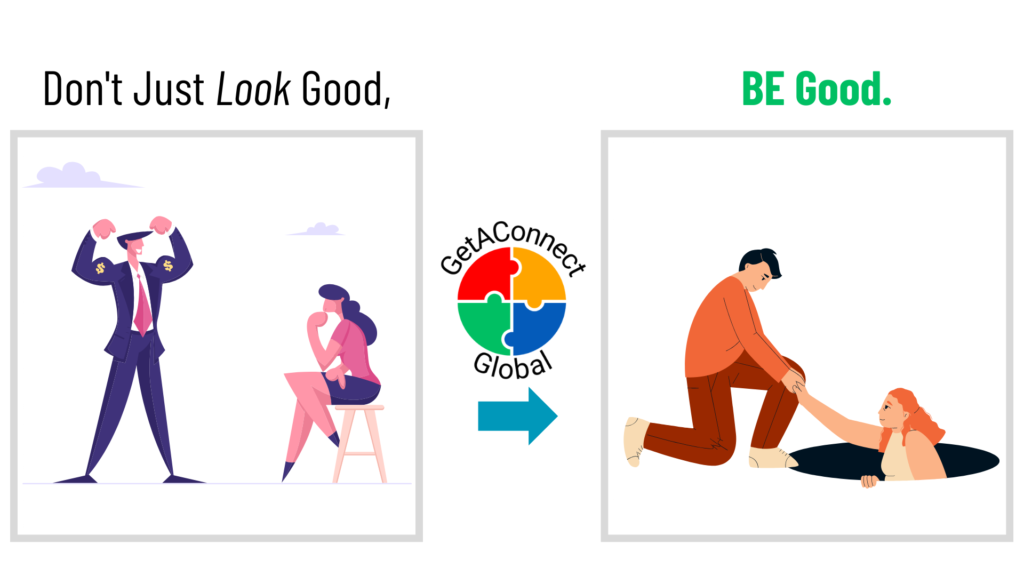
As explained in GetAConnect’s foundational piece on consultative selling, the core principle is simple: the real business happens when you do not talk business. You provide value first — insights, education, frameworks — and earn trust. Only then does selling become natural, because the buyer already sees you as the expert who understands their problem better than anyone else.
This approach works because it aligns perfectly with how modern buyers actually make decisions. They do not want to be sold to. They want to be understood. They want personalized recommendations based on their specific context, not generic product pitches. And crucially, they want this experience immediately — not after filling out a form and waiting three days for a sales rep to call them back.
| Selling happens only when the buyer trusts the seller. Consultative selling builds that trust by giving value before asking for anything in return. |
The Scalability Problem: Why Most Companies Cannot Do This at Scale
Here is where most businesses get stuck. Consultative selling demands deep customer insights, tailored conversations, and ongoing education — all of which traditionally require significant time, energy, and human resources. A single sales rep might be able to consult five to ten prospects per day. Beyond that, quality drops, response times increase, and leads go cold.
The objection from leadership is always the same: ‘My customers are too numerous. I cannot afford to do consultative selling because it does not scale.’ This was true a decade ago. It is not true anymore.
Digital tools now allow CMOs and sales leaders to deliver personalized, consultative experiences to thousands of prospects simultaneously — without adding headcount, without complex implementation, and without sacrificing the quality of the interaction.
The Proven Benefits of Consultative Selling at Scale
When done right, consultative selling delivers measurable, compounding advantages that traditional lead forms and outbound sales simply cannot match. Here are the core benefits backed by real-world performance data:
- Automated 24/7 Sales Rep: Interactive quizzes and assessments qualify and score leads around the clock, freeing your sales team to focus exclusively on warm, high-intent opportunities. Prospects feel guided rather than sold to, which is the essence of consultative selling.
- Higher Conversion Rates: By providing personalized results instead of a blank lead form, interactive funnels engage visitors and significantly boost conversion. Studies consistently show that interactive assessment formats achieve 2–3× higher conversion rates than static forms. Users stay longer on the site and are far more likely to share their contact information after receiving tangible value.
- Actionable Buyer Intent Insights: Each quiz answer reveals buyer intent in real time. You can segment prospects into precise buckets based on their responses — by needs, maturity, budget sensitivity, or urgency. These insights enable hyper-targeted follow-up. For example, you can immediately serve the perfect product recommendation or piece of content based on quiz outcomes, accelerating decision-making.
- Instant Product Recommendations: Interactive assessments function as embedded recommendation engines. Based on assessment results, customers receive instant suggestions of the most relevant products, upgrade paths, or next steps — without waiting for a human to interpret their needs. This speeds up the sales cycle and improves customer satisfaction simultaneously.
Answering the Four Critical Questions Every CMO Asks
Let us get tactical. If you are a CMO or sales leader evaluating whether digital consultative selling makes sense for your business, these are the four questions you are asking right now. Here is how modern platforms solve each one.
1. How can I qualify leads automatically without a large inside sales team?
The answer is interactive lead qualification funnels — specifically, branded Assessments, Surveys, and Quizzes (ASQs) that act as your first line of sales qualification.
Instead of a static ‘Contact Us’ form, you deploy a smart assessment that asks the right discovery questions in sequence. For example, a SaaS company selling project management software might ask: ‘How many team members do you manage?’ → ‘What is your biggest project bottleneck today?’ → ‘Do you currently use any PM tools?’ Each answer automatically scores the lead and categorizes them by fit.
At the end of the funnel, high-scoring leads get routed directly to sales with a full breakdown of their needs. Medium-scoring leads enter a nurture sequence. Low-scoring leads receive educational content to warm them up over time. Your sales team never wastes time on unqualified prospects again.
Example: A B2B consulting firm uses a ‘Business Maturity Assessment’ on their homepage. Visitors answer seven questions about their current challenges. Based on responses, the platform recommends a specific service tier and flags enterprise-level prospects to the sales director within minutes.
2. How can I give every website visitor a personalized product recommendation without human intervention?
Personalization at scale is achieved through conditional logic and dynamic content delivery built into your assessment funnel.
Modern platforms allow you to map every possible combination of quiz responses to a specific outcome — a personalized recommendation page, a product suggestion, a custom content package, or a tailored next step. The visitor experiences a one-on-one consultation, but the entire journey is automated.
For instance, an e-commerce brand selling skincare products might deploy a ‘Skin Type Quiz’ that asks about skin concerns, climate, age, and current routine. Based on the answers, the platform dynamically generates a personalized product bundle with explanations for why each item was chosen. The visitor feels understood and guided — not marketed to.
Example: A financial services company runs a ‘Retirement Readiness Calculator’ that asks about age, income, savings goals, and risk tolerance. At the end, each visitor receives a custom retirement plan recommendation with specific product suggestions (401k rollover, IRA setup, robo-advisor enrollment) based entirely on their inputs. Conversion to consultation bookings increased by 180% after launch.
3. How can I replace static lead forms with something that actually converts?
Static forms fail because they ask for value (contact information) before delivering any. Interactive funnels flip this exchange: give value first, then ask.
The psychology is simple. A prospect who just spent three minutes engaging with a thoughtful assessment and received a personalized result feels like they got something valuable. When you ask for their email at the end to send the full report or unlock next steps, the trade feels fair. Completion rates skyrocket.
Compare this to a static form that says ‘Download our whitepaper’ with five fields to fill. The prospect has no proof the whitepaper is worth their information. Friction is high, trust is low, abandonment is inevitable.
Interactive funnels also allow progressive profiling — you can ask lightweight questions upfront (no email required) and only request contact details at the point of maximum engagement, after the prospect is already invested in the journey.
Example: A marketing agency replaced their ‘Request a Proposal’ form with a ‘Marketing Audit Quiz.’ Visitors answer questions about their current marketing channels, goals, and budget. At the end, they receive a free audit scorecard highlighting gaps. To unlock the detailed action plan, they provide their email. Form completion rate went from 8% to 34%, and lead quality improved because only engaged prospects completed the funnel.
4. How can I uncover buyer intent before my sales team gets on a call?
Buyer intent signals are embedded in every quiz response, page visit, and content interaction — but most businesses never capture or use this data effectively.
When a prospect completes an assessment, you learn exactly what they care about: which pain points resonate, which features matter, what their timeline looks like, what their budget constraints are, and what objections they are likely to raise. All of this is captured passively through the funnel logic.
By the time your sales rep gets on a call, they already have a complete profile: this prospect is a Director-level buyer at a mid-market company, struggling with team alignment issues, evaluating three competitors, has budget allocated for Q2, and is most interested in integrations with Salesforce. The sales conversation shifts from discovery to solution design immediately.
Example: A CRM platform uses a ‘Sales Stack Assessment’ to identify which tools a prospect currently uses, what their team size is, and what workflows are broken. Sales reps receive a pre-call brief with intent scores across five categories: urgency, budget fit, feature alignment, competitive risk, and decision-maker access. Close rates improved by 40% because reps spent zero time on basic discovery and could tailor demos precisely to the prospect’s stated needs.
How GetAConnect Powers Consultative Selling at Scale
This is where GetAConnect becomes indispensable. It is a no-code content management platform built specifically to help businesses deploy branded, intelligent funnels for lead qualification, product recommendations, and consultative engagement — all hosted on your own domain.
Here is what makes it different from generic form builders or survey tools:
GetAConnect’s Consultative Selling Capabilities:
|
Which Businesses Should Adopt Consultative Selling at Scale?
Not every business needs this approach — but if you recognize your company in any of these scenarios, consultative selling at scale is not optional, it is essential:
- B2B SaaS companies with complex products that require education before purchase
- Professional services firms (consulting, legal, financial advisory) where trust and expertise are the primary differentiators
- E-commerce brands with diverse product catalogs where personalized recommendations significantly impact conversion
- Training and education businesses that need to qualify learners before enrollment
- High-ticket or long-cycle sales where prospects need multiple touchpoints and nurturing before they are ready to buy
- Any business currently struggling with high lead volume but low lead quality — where marketing generates plenty of traffic but sales complains that most leads are not ready
If your sales team spends more than 50% of their time on discovery calls that go nowhere, or if your website gets thousands of visitors but only single-digit conversions, you need consultative selling infrastructure — immediately.
6 Steps to Adopt Consultative Selling at Scale
Moving from static forms and manual qualification to a fully automated consultative selling system is simpler than most CMOs expect. Follow these steps in sequence:
| # | Step | What to Do |
| 1 | Map Your Ideal Customer Journey | Identify the key questions a salesperson would ask in a discovery call: pain points, goals, current solutions, timeline, budget, decision-making process. These questions become the foundation of your assessment funnel. |
| 2 | Build Your First ASQ Funnel | Start with one high-traffic page — usually the homepage or a key landing page. Replace the static lead form with an interactive assessment that asks 5–7 discovery questions in a conversational flow. Use conditional logic to personalize the experience based on responses. |
| 3 | Define Lead Scoring Rules | Assign point values to each answer based on buying intent. For example, ‘We need a solution within 30 days’ scores higher than ‘Just exploring options.’ Set thresholds: 80+ points = hot lead (route to sales immediately), 50–79 = warm lead (nurture sequence), below 50 = educational content. |
| 4 | Create Personalized Outcome Pages | For each segment, design a custom results page that delivers value: a free audit, a personalized recommendation report, a diagnostic scorecard, or a curated content bundle. This is where the visitor feels the consultative experience — they got real insight, not a generic sales pitch. |
| 5 | Integrate With Your Sales Stack | Connect the funnel to your CRM, marketing automation platform, and sales notification systems. High-intent leads should trigger immediate alerts to sales reps with full context. Medium-intent leads should auto-enroll in email nurture sequences. Track everything. |
| 6 | Measure, Iterate, Scale | Monitor completion rates, conversion rates by segment, sales-accepted lead percentages, and time-to-close. Identify drop-off points in the funnel and test variations. Once the first funnel performs, replicate the model across other pages, products, or customer segments. |
Summary: Consultative Selling Is No Longer a Luxury — It Is Table Stakes
The buyers of today expect personalized, consultative experiences at every touchpoint. They will not wait three days for a sales rep to call them back. They will not fill out a ten-field form just to download a PDF. And they will not buy from a brand that treats them like a number in a CRM.
The good news? You do not need a massive sales team to deliver this experience. You need the right infrastructure — intelligent funnels that ask the right questions, deliver personalized value, and qualify leads automatically, 24/7.
Platforms like GetAConnect make this possible for any business, regardless of size or technical capability. You can launch a fully branded, consultative selling funnel in days, not months. You can qualify thousands of leads with the same level of personalization that used to require one-on-one sales calls. And you can give your sales team what they actually need: fewer leads, but all of them ready to buy.
The question is not whether consultative selling at scale is possible. The question is: how much longer can you afford to operate without it?